
Searches like "why do I feel hot during meditation," "spiritual heat sensation," and "energy heat in body during meditation" usually come from the same moment: you were trying to be still, then your body started feeling charged. Heat can feel intimate and powerful, which is why it is easy to assume it must have one fixed meaning.
People also search for "heat moving through body during meditation," "burning sensation during meditation," "hot feeling during meditation," "warm body after meditation," and "overheating after meditation." Those phrases are not identical, but they all deserve the same calm first question: does this feel steady, or is the practice becoming too stimulating?
A better first step is to separate sensation from conclusion. Warmth is a real body experience. The meaning of that experience depends on context, intensity, your body state, your practice style, and whether you remain grounded.
What heat during meditation can feel like
Heat does not always feel like ordinary temperature. It may feel like warmth under the skin, a current, flushing, radiance, pressure, or a wave. Some people feel it in one area. Others feel it move.
- warm palms or fingertips during meditation
- heat in the chest, belly, forehead, or spine
- a flushed face or warm ears
- heat rising during breathwork, prayer, or stillness
- bursts of warmth with emotion or release
- feeling hot, wired, or overstimulated after meditation
- a burning sensation that may feel energetic, emotional, or physically uncomfortable
- heat paired with tingling, chills, pressure, or a racing mind
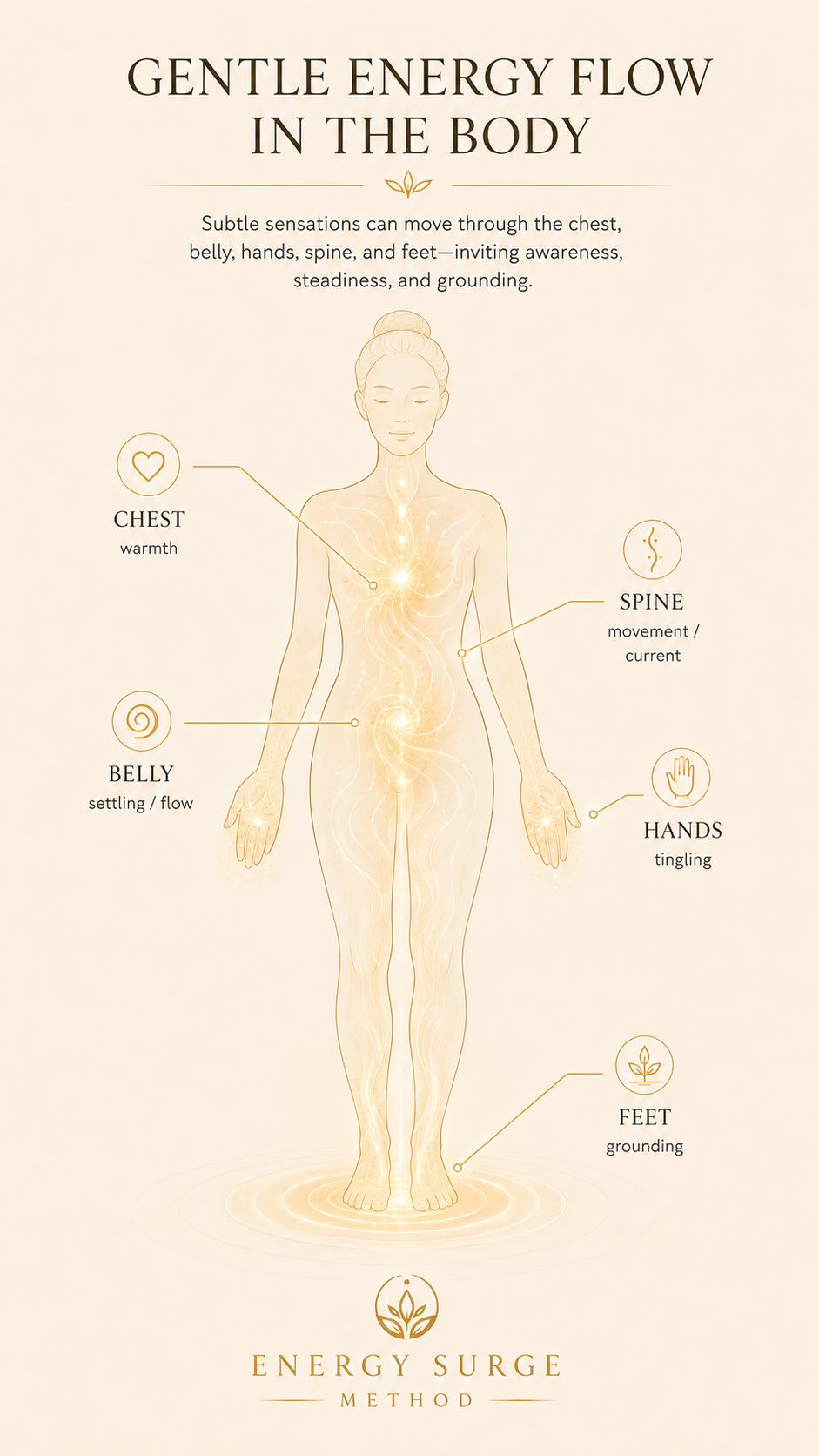
Energy heat, breath, and body warmth
Heat is one of the most searched meditation sensations because it can feel so dramatic. People may describe heat moving through the body, warmth in the chest, warmth in the hands, or energy moving through the spine. In simple terms, the body may be responding to attention, breath, emotion, posture, or energetic sensitivity.
The safest approach is not to argue with the label. It is to check capacity. If heat feels calm and contained, you can observe it gently. If heat feels burning, panicky, dizzying, sleepless, or compulsive, lower the intensity and ground before you interpret.
Why warmth may appear in meditation
Meditation can make internal sensations easier to notice. Breathing patterns, attention, emotional release, posture, room temperature, and body activation can all influence how much heat you feel. If you are doing breathwork, chanting, visualization, intense concentration, or energy practices, warmth may become more noticeable.
Some readers experience the warmth as spiritual energy moving through the body. That may be a meaningful way to describe it, especially if the sensation arrives with calm, clarity, reverence, or compassion. But the body still gets a vote. If the warmth tips into agitation, dizziness, panic, or sleeplessness, it is time to reduce intensity.
This is especially important with intense breathwork, long meditations, fasting, sleep loss, or heavy spiritual content consumption. Those can all make the body more reactive. Heat that appears inside a calm practice is different from heat that arrives inside an already strained system.
Is body heat during meditation good or bad?
Heat is not automatically good or bad. Mild warmth may simply be part of settling, releasing, praying, or becoming more aware. Strong heat can also be a sign that the practice has become too stimulating for your current capacity.
Instead of asking whether the heat is positive or negative, ask whether it leaves you more regulated. Are you breathing normally? Can you feel the room? Can you stop the practice if you choose? Do you feel more present afterward, or more scattered? Those questions matter more than any dramatic label.
How to cool and ground the experience
If heat feels pleasant and contained, you may not need to do anything. Let it be there without chasing more. If it grows too strong, choose cooling, ordinary, body-based steps.
- Open your eyes and look around the room.
- Unclench the belly, hands, jaw, and shoulders.
- Slow the practice down or stop for the day.
- Drink water and do something simple, practical, and physical.
- Avoid stacking more intense practices on top of the heat.
When heat may be overstimulation
The goal is not to shut down sensitivity. The goal is to build enough steadiness that sensitivity becomes workable. For many people, that means less intensity, more grounding, and a slower pace than the mind wants.
Common questions about heat during meditation
Why does my body get hot during meditation? Heat may come from focused attention, breathing, emotional release, room temperature, posture, body activation, or a spiritual energy experience. Context matters.
Does heat moving through the body mean something spiritual? It may feel spiritually meaningful, especially when it appears during prayer, meditation, or quiet reflection. Still, the first response should be safety, grounding, and pacing.
What should I do if meditation makes me feel overheated? Stop pushing, open your eyes, cool the body, drink water, move gently, and avoid adding more breathwork or intense practice on top.
What to explore next
Heat often appears alongside tingling, chills, pressure, emotional waves, or spiritual overstimulation. If your body seems to move through several sensations at once, it can help to track patterns rather than interpret each sensation in isolation.
Go further with the full method.
The complete bundle explores grounding in much more detail, with guided pages, trackers, and a fuller structure for practice and integration.
Get the Complete Bundle