Spiritual overstimulation happens when the intensity of an experience outruns the body's ability to hold it well. That does not always mean something is wrong. But it does mean the system needs less input, more grounding, and probably more recovery than the person wants to admit in the moment.
People search for this in many ways: "spiritual energy too strong," "energy overload symptoms," "meditation made me anxious," "can't sleep after meditation," "buzzing body after energy work," and "how to calm down after intense meditation." Different words, same core problem: the experience has moved beyond curiosity and into overwhelm.
There is a point where curiosity stops being helpful. This is that point. Safety first, meaning later.
Common signs of spiritual overstimulation
The signs are often less mystical than people expect and more physiological than they want them to be.
- persistent buzzing or electric sensation that will not settle
- sleep disruption after practice
- racing thoughts or urgency to keep going
- panic, derealization, or emotional flooding
- feeling spiritually open but physically unsteady
- heat, chills, pressure, or tingling that keeps intensifying
- scrolling spiritual content for reassurance but feeling worse afterward
- feeling detached from ordinary routines, meals, work, or relationships
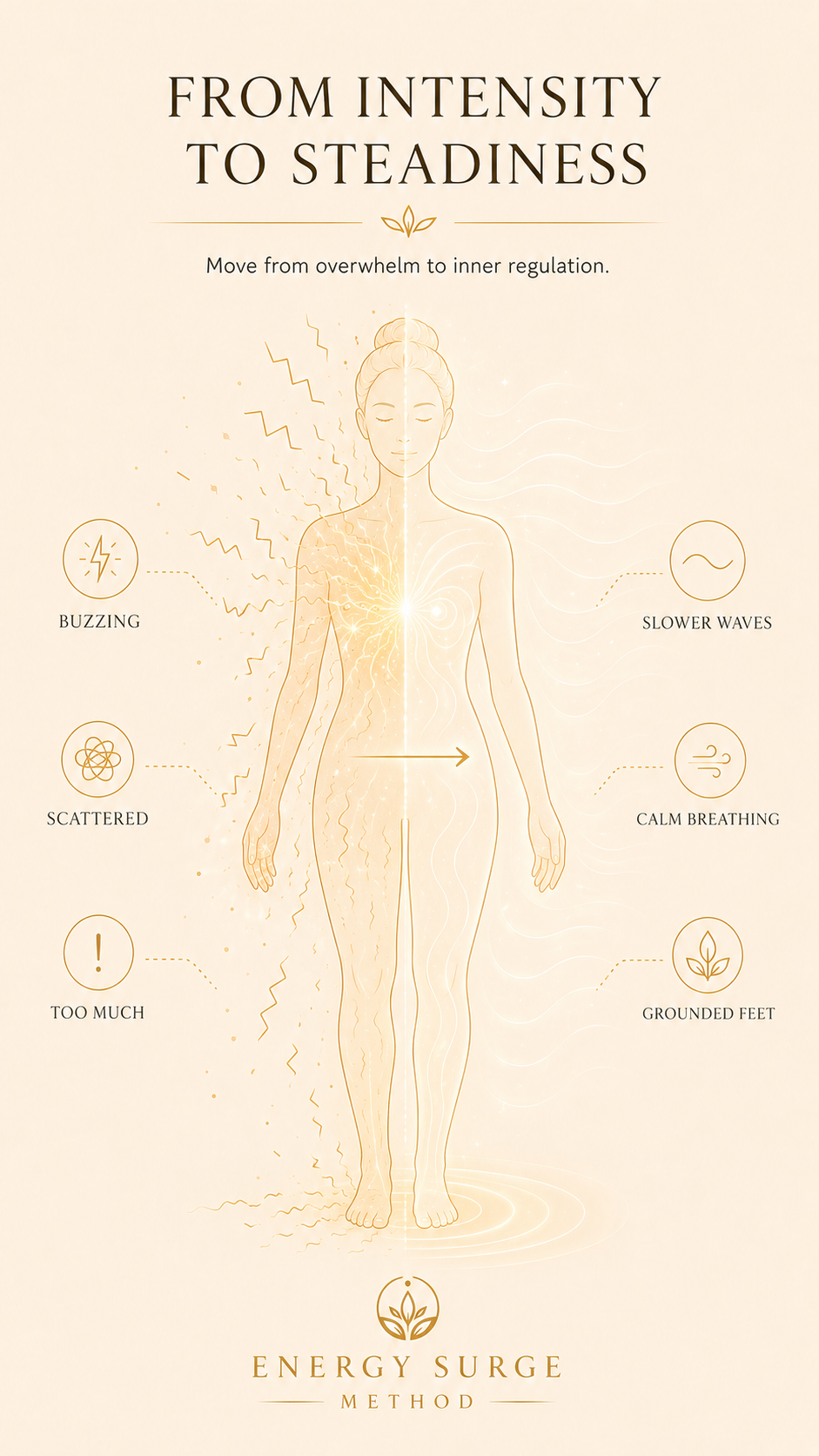
Why too much searching can make energy overload worse
Meditation forums, spiritual videos, and comment threads can be helpful when they make you feel less alone. They can also escalate the experience when every sensation gets framed as a sign, crisis, blockage, or emergency. If your body is already overstimulated, more interpretation can become more stimulation.
This is why grounding needs to come before meaning-making. Search less for a moment. Eat something simple. Turn down sound and screen input. Let your body remember the room, the day, and the ordinary world around you.
What to do first
If you need to calm intense spiritual energy, return to the most ordinary forms of regulation you can find. The goal is not elegance. The goal is downshifting.
- Stop meditation, breathwork, and energy work for the moment.
- Eat, hydrate, and return attention to the body.
- Choose ordinary tasks: shower, laundry, walking, cleaning, or cooking.
- Reduce isolation and talk to a grounded person if needed.
- If the experience persists or worsens, seek qualified professional support.
If you are using terms like spiritual burnout, energy overload, or energetic overwhelm, the response is similar: reduce input, increase safety, and stop treating intensity as the only measure of progress.
Why less is often the answer
This can be a difficult lesson, partly because intensity flatters the mind. It can feel important. It can feel like progress. Sometimes it is progress. Sometimes it is simply too much voltage moving through a tired system.
There is more nuance here than a short article can hold. The deeper work is learning how to recognize your own limits earlier, before the system gets pushed this far.
Common questions about spiritual overstimulation
Can meditation overstimulate you? Yes, especially when practice is intense, sleep is poor, breathwork is forceful, or the person is already stressed. Meditation is not automatically calming for every body in every moment.
Is this energy overload? It may feel that way when heat, pressure, buzzing, or sleep disruption appear. Whatever label you use, the first response should still be grounding, rest, and reducing intensity.
How long does spiritual overstimulation last? It varies. Mild overstimulation may settle after rest and grounding. Persistent fear, insomnia, dissociation, or impaired functioning deserves outside support rather than more spiritual searching.
Get the fuller safety-first framework.
The ebook and bundle include grounding pages, regulation tools, and a much more complete response to spiritual overstimulation and recovery.
Get the Complete Bundle