
People sometimes treat grounding like a minor step before the real spiritual work begins. But if we are being honest, grounding is part of the real work. It is what keeps an experience from becoming mentally consuming or physically overwhelming. And it is usually much less glamorous than people expect.
People search for this in practical language: "how to ground spiritual energy," "grounding techniques," "how to ground after meditation," "what to do when energy feels too strong," and "how to calm down after intense meditation." Those searches point to the same bridge: spiritual sensitivity needs body-based steadiness.
Signs you need grounding
The signals are often straightforward, even if we would rather interpret them as something more mysterious.
- you feel more wired than clear
- the body is buzzing and you cannot settle
- your sleep feels disrupted after practice
- you feel pulled toward intensity instead of steadiness
- ordinary tasks suddenly feel hard to return to
- you keep searching for explanations but feel less calm after each search
- you feel open spiritually but dysregulated physically
Grounding techniques that match the method
There are many ways to ground yourself spiritually, but the best starting points are simple and repeatable. A grounding ritual can be as ordinary as walking outside, feeling your feet, eating warm food, stretching, taking a shower, journaling, or naming what you can see in the room. The goal is not to perform spirituality. The goal is to help the body feel safe enough to settle.
- contact grounding: feel your feet, chair, hands, and the weight of your body
- room grounding: name ordinary objects and let your eyes take in the space
- nature grounding: walk outside, touch soil, or notice ordinary outdoor details
- routine grounding: cook, clean, fold laundry, drink water, or do one simple task slowly
- breath grounding: let the breath become natural instead of using intense breathing to push harder
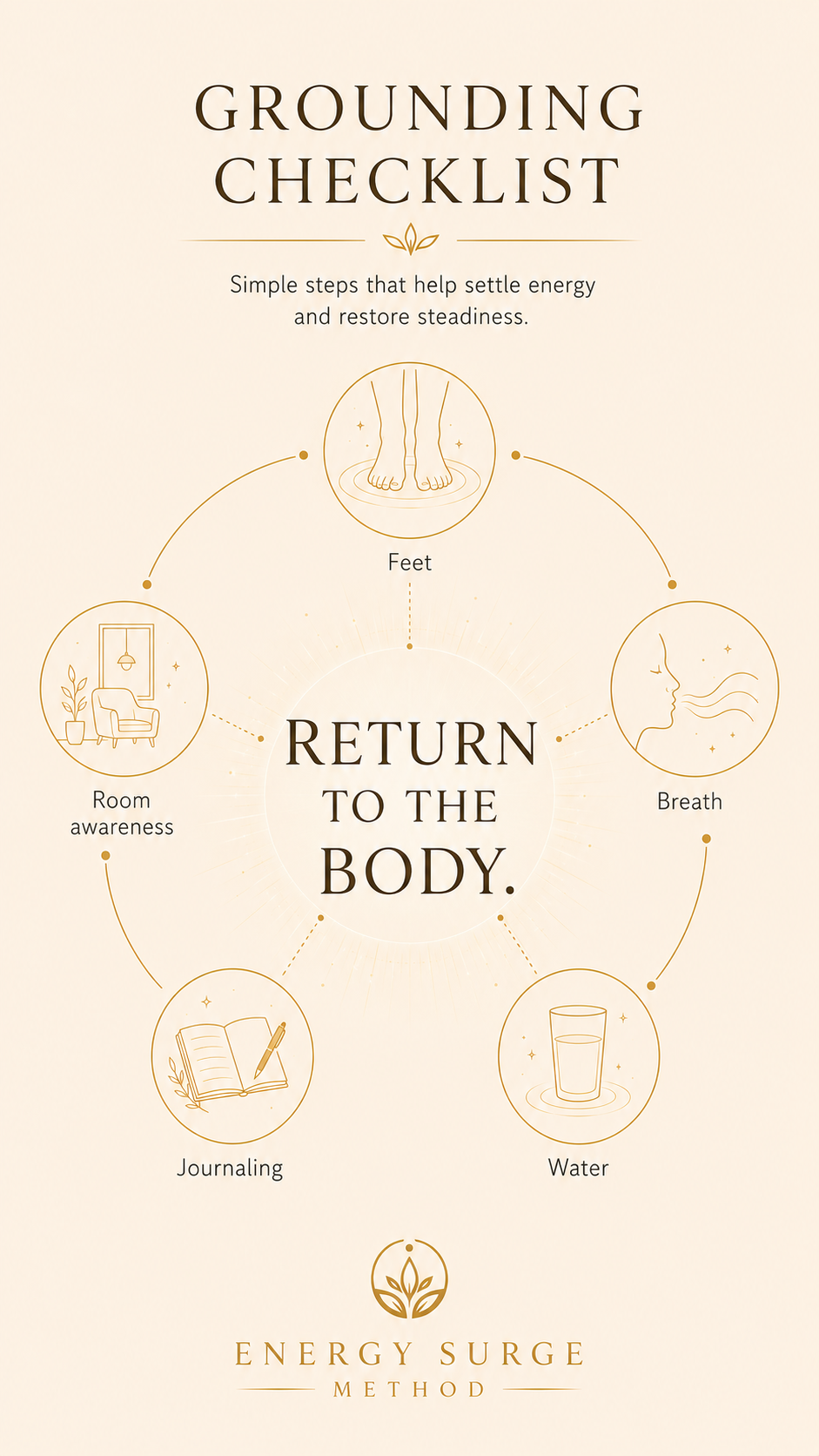
A simple grounding sequence
If you are wondering how to ground spiritual energy safely, start with what is concrete. Not symbolic. Concrete.
- Feel the contact points: feet, chair, floor, and hands.
- Simplify the breath and let it become natural again.
- Return to the room and name ordinary objects around you.
- Use the body: walk, shower, tidy, cook, stretch, or eat.
- Reduce stimulation and stop before overwhelm builds.
None of that sounds impressive. That is part of the point. The body usually responds better to the ordinary than to anything theatrical.
You know grounding is working when you can breathe more normally, feel the room again, make simple choices, and return to daily life without feeling pulled apart by the experience.
There is a deeper side to grounding, of course. The ebook goes further into pacing, capacity, and what changes when grounding becomes an actual practice rather than just an emergency response.
What not to do
Intensity can feel persuasive. It can feel important. But importance and usefulness are not the same thing. Sometimes the most mature response is simply to do less.
Common questions about grounding spiritual energy
How do I ground myself after meditation? End the session gently, open your eyes, feel the floor, drink water, move slowly, and do one ordinary task before returning to spiritual reflection.
What is the fastest grounding technique? For many people, contact points work fastest: feet on the floor, hands on the body, eyes open, attention on the room, and a few natural breaths.
Can grounding stop spiritual energy? Grounding is not meant to reject the experience. It helps you carry it with more stability, so you are not chasing intensity or tipping into overwhelm.
Go further with the full method.
The complete bundle explores grounding in much more detail, with guided pages, trackers, and a fuller structure for practice and integration.
Get the Complete Bundle